Wednesday, November 30, 2005

Raja Ravi Verma

Know about Raja Ravi Verma...

Raja Ravi Varma was born on April 29, 1848 at Kilimanoor, a small town in Kerala. As a boy of five, he filled the walls of his house with pictures of animals and illustrations from everyday life. His uncle the artist Raja Raja Varma recognized his talents and gave him elementary art lessons. He was taken to Thiruvananthapuram in his fourteenth year to stay in the royal palace and learn oil painting. During these formative years the young Ravi Varma had many opportunities to discover and learn new techniques and media in the field of painting. His later years spent in Mysore, Baroda ad other parts of the country enabled him to sharpen and expand his skills and blossom into a mature and complete painter.

The glittering career of Raja Ravi Varma is a striking case study of academic art in India. In the year following his death, the ‘Modern Review’ described him as the greatest artist of modern India, a national builder who showed the moral courage of a gifted 'high-born' in taking up the 'degrading profession of painting'. He was courted assiduously by the British Empire as well as by the Indian Maharajas. His less expensive prints of his Hindu deities hung in every home.


Raja Ravi Varma owed his success to a systematic training, first in the traditional art of Thanjavoor, and then in European art. His paintings can be broadly classified into 1.Portraits, 2.Portrait-based compositions, 3.Theatrical compositions based on myths and legends.

Though the artist's immense popularity lay in the third category, the first two types of works prove his merit as an exceedingly sensitive and competent artist. No other painter till today has been able to supersede Ravi Varma in portraiture in the oil medium.

Ravi Varma is considered as modern among traditionalists and a rationalist among moderns. He provided a vital link between the traditional Indian art and the contemporary, between the Thanjavoor School and Western Academic realism. He brought Indian painting to the attention of the larger world.

Raja Ravi Varma breathed his last on 2nd October 1906

Wednesday, November 16, 2005

History of Yahoo!


Yahoo! began as a student hobby and evolved into a global brand that has changed the way people communicate with each other, find and access information and purchase things. The two founders of Yahoo!, David Filo and Jerry Yang, Ph.D. candidates in Electrical Engineering at Stanford University, started their guide in a campus trailer in February 1994 as a way to keep track of their personal interests on the Internet. Before long they were spending more time on their home-brewed lists of favorite links than on their doctoral dissertations. Eventually, Jerry and David's lists became too long and unwieldy, and they broke them out into categories. When the categories became too full, they developed subcategories ... and the core concept behind Yahoo! was born.

The Web site started out as "Jerry and David's Guide to the World Wide Web" but eventually received a new moniker with the help of a dictionary. The name Yahoo! is an acronym for "Yet Another Hierarchical Officious Oracle," but Filo and Yang insist they selected the name because they liked the general definition of a yahoo: "rude, unsophisticated, uncouth." Yahoo! itself first resided on Yang's student workstation, "Akebono," while the software was lodged on Filo's computer, "Konishiki" - both named after legendary sumo wrestlers.

Jerry and David soon found they were not alone in wanting a single place to find useful Web sites. Before long, hundreds of people were accessing their guide from well beyond the Stanford trailer. Word spread from friends to what quickly became a significant, loyal audience throughout the closely-knit Internet community. Yahoo! celebrated its first million-hit day in the fall of 1994, translating to almost 100 thousand unique visitors.

Due to the torrent of traffic and enthusiastic reception Yahoo! was receiving, the founders knew they had a potential business on their hands. In March 1995, the pair incorporated the business and met with dozens of Silicon Valley venture capitalists. They eventually came across Sequoia Capital, the well-regarded firm whose most successful investments included Apple Computer, Atari, Oracle and Cisco Systems. They agreed to fund Yahoo! in April 1995 with an initial investment of nearly $2 million.

Realizing their new company had the potential to grow quickly, Jerry and David began to shop for a management team. They hired Tim Koogle, a veteran of Motorola and an alumnus of the Stanford engineering department, as chief executive officer and Jeffrey Mallett, founder of Novell's WordPerfect consumer division, as chief operating officer. They secured a second round of funding in Fall 1995 from investors Reuters Ltd. and Softbank. Yahoo! launched a highly-successful IPO in April 1996 with a total of 49 employees.

Today, Yahoo! Inc. is a leading global Internet communications, commerce and media company that offers a comprehensive branded network of services to more than 345 million individuals each month worldwide. As the first online navigational guide to the Web, www.yahoo.com is the leading guide in terms of traffic, advertising, household and business user reach. Yahoo! is the No. 1 Internet brand globally and reaches the largest audience worldwide. The company also provides online business and enterprise services designed to enhance the productivity and Web presence of Yahoo!'s clients. These services include Corporate Yahoo!, a popular customized enterprise portal solution; audio and video streaming; store hosting and management; and Web site tools and services. The company's global Web network includes 25 World properties. Headquartered in Sunnyvale, Calif., Yahoo! has offices in Europe, Asia, Latin America, Australia, Canada and the United States.

Tuesday, November 15, 2005

On Break

Due to my PG Exams and my hectic work pressure I am taking a Break for one month and will be back on Dec 2nd Week.

Wednesday, November 09, 2005

Kooduthurai

This is a kind of Advertising my own land.
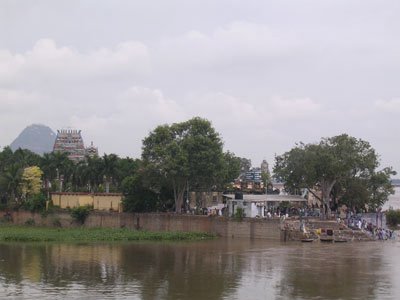
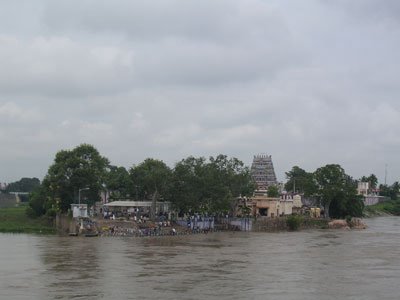
I brought up from a small town called Bhavani(Carpet Town,(Famous for Jamakalam-Carpet), Erode Dist. This temple placed where river Kaveri and Bhavani confluence. I was waiting to taking a picture of this temple(last year both the rivers are dried and rather this year, esp. this month it is flooded). Have glimpse of these pictures.


The Sangameshwar Temple at Bhavani is situated at the confluence of the Rivers Bhavani and the Cauvery. This place is called ‘Tiruveni of South India’(in Tamil Kooduthurai). It is an important pilgrim centre. Lord Sangameshwarer with His consort Vedanayaki is the presiding deity. It is said that during the East India Company regime the then Collector of Coimbatore and Salem Districts, William Garrow, who had his headquarters at Bhavani, worshipped Goddess Vedanayaki. One night the Goddess directed him in his dream to vacate his bungalow immediately. The moment he moved out, the entire bungalow collapsed. He wondered at this miracle and he presented to the temple an ivory cradle, which is still in the temple, with is signature.

In North India, the meeting point of 3 Rivers namely the Ganges, the Jamuna and the Saraswathi is very famous and is called as "TRIVENI SANGAM". Likewise, at Bhavani-Kudal also three rivers viz., the Cauvery, the Bhavani and the Amudha are meeting together. It is, therefore, name as "DAKSHINA PRAYAG". So, the God that persists here is called as "KUDAL NATH" (KUDAL NATHAR) and since three river meet at this place, the name "SANGAMESWARAR" is also in use. Amongst the three rivers, the Amudha river that is not apparent is also significant. Bhavani Kudal is also a place for fate relief centre. People who are affected by various evil elements, take a dip in the river and perform remedial poojas here. As the death ceremony is performed in the Ganges by way of dissolving the ashes after the death of the person and to yield sanctity, the same type of ceremonies are performed here also. The ashes of various leaders and dignitaries were dissolved here. For example, the ashes of the Central Minister Late Rangarajan Kumaramangalam, and the State Level Congress Leader (Late) G.K. Mooppanar were dissolved recently here.


Temple's Web Site

Monday, November 07, 2005

Diwali Celeb


Its been more tha 10 days we celeberated Diwali. I bought a Nikon 3100 Digicam 2 years before. From the Day-1 I am trying to take a picture with cracking effects. This time I was fully loaded (I browsed some web pages, magazines to take some pictures in Night effects and with crackers).

Sunday, October 30, 2005

Happy Diwali & Eid Mubarak

Happy Diwali!


Eid Mubarak

Friday, October 28, 2005

Marketing Concepts


It is not wrong when we are sharing what we enjoyed So Control C and Control V are right sometimes as MS does.

A professor at IIM was explaining marketing concepts:

1. You see a gorgeous girl at a party. You go up to her and say: "I am
very rich. Marry me!" - That's Direct Marketing

2. You're at a party with a bunch of friends and see a gorgeous girl.
One of your friends goes up to her and pointing at you says: "He's very
rich. Marry him." -

That's Advertising.

3. You see a gorgeous girl at a party. You go up to her and get her
telephone number. The next day, you call and say: "Hi, I'm very rich.
Marry me." - That's Telemarketing.

4. You're at a party and see gorgeous girl. You get up and straighten
your tie, you walk up to her and pour her a drink, you open the door (of
the car)for her, pick up her bag after she drops it, offer her ride and
then say:"By the way, I'm rich. Will you marry me?" - That's Public
Relations

5. You're! at a party and see gorgeous girl. She walks up to you and
says:

"You are very rich! Can you marry ! me?" - That's Brand Recognition.

6. You see a gorgeous girl at a party. You go up to her and say: "I am
very rich. Marry me!" She gives you a nice hard slap on your face. -
That's Customer Feedback.

7. You see a gorgeous girl at a party. You go up to her and say: "I am
very rich. Marry me!" And she introduces you to her husband. - That's
demand and supply gap.

8. You see a gorgeous girl at a party. You go up to her and before you
say anything, another person come and tell her: "I'm rich. Will you
marry me?" and she goes with him - That's competition eating into your
market share.

9. You see and gorgeous girl at a party. You go up to her and before you
say: "I'm rich Marry me!" your wi fe arrives. - That's restriction for
entering new markets.

Thursday, October 27, 2005

Is IT time to wind up from Bangalore

Last Sunday night, it was impossible to reach the Bangalore airport as the rain pounded the city and the waters were rising. And the infrastructure collapsed completely, leaving vital links to the city disrupted. And angry city residents could do nothing but be patient and wait for situation to normalise.

Check out the photos Click Here

Richmond Circle was a scene straight from hell. Most roads and city's all arteries are clogged.
The rains left many I-T firms inundated. Wipro office was inundated too. Office goers had a tough time.

The rains have wreaked havoc in the IT city at a time when there was a face-off between the Infosys mentor Narayanamurthy and the former Prime Minister H.D Deve Gowda about how the former has been indulging in land-grabbing and has not been concentrating on the Bangalore International Airport.

It began when the Wipro chief Azim Premji first raised an alarm about the deteriorating infrastructure in the city, lack of infrastructure facilities and lack of accommodation facilities. Recently, Bangalore was again in news for its astronomical hotel prices almost as high as London and Paris.With the row between N R Narayana Murthy and Deve Gowda escalating, the AP government has moved into top gear to woo Infosys to Hyderabad. The IT major already has a campus in Hyderabad's hi-tech district Cyberabad, but the Y S Rajasekhara Reddy government is offering it land for a second. "Hyderabad is willing to host a larger Infosys facility," a senior AP government official said.

IT minister Sabita Indra Reddy said an Infosys team has already met Rajasekhara Reddy and sought about 100 acres. "We have agreed," the minister confirmed. Officials said an announcement could come within "ten days." This possibility comes barely two days after Wipro signed a deal with the AP government to set up its second software development centre in Hyderabad "within 12 months".

Under the deal, Wipro has been allotted 100 acres at below-market prices. An AP government team is likely to be active in Bangalore's annual four-day IT event, BangaloreIT.in, next week to win Infosys and other companies fed up with the collapsing infrastructure in the Garden City. "We (AP) are hosting a dinner at the BangaloreIT.in on Oct. 26.

If the Infosys deal is clinched, Wipro and Narayana Murthy's company will be the first IT firms to have a second campus in Hyderabad. Other companies like Microsoft, GE and Oracle have only single units here.

Hyderabad, however, has a long way to go before catching up with Bangalore. This is clear from software export figures. At Rs 8,270 crore in the last financial year, software exports from Hyderabad were less than a third of Rs Bangalore's 27,600 crore.

Gowda Wake Up atleast Now..

Tuesday, October 25, 2005

Farmers profit as ITC sells Himachal apples

Uzhavar Sandhai, a good plan might have dropped in TN govt however the same mode of operation is successful in ITC-IBD. The major concern about this project to reduce the brokerage and increase the profit to Farmer end. Since echoupal is successfull IBD started open their hand widely to move to some other products. They started with APPLEs as an experiment and succeeded in that also. Look at the review from portal


ITC has in collaboration with the state-run Himachal Pradesh Horticultural Produce Marketing and Processing Corp(HPMC) for the first time purchased apples from select farmers and just finished selling them in India's metropolitan centres.

"ITC with help from HPMC procured almost 13,000 boxes of apple valued at around Rs.6 million," said C.R.B. Lalit, the managing director of HPMC.

"The fruit was procured from selected orchards and sold by ITC in selected outlets. ITC paid the farmers immediately. HPMC has been paid a commission of Rs.25 a box for providing local help to ITC," he said.

Many farmers who sold their produce to ITC seem satisfied.

"I got a 30 percent higher price than what the average apple farmers sell at to commission agents in several cities across India," said Ranjeet Mehta, an apple farmer from Kotgarh.

Even though the apple procured by ITC is only a fraction (13,000 boxes, each box weighs around 22 kg) of the total produce of 230 million boxes in the state, many feel this could mark the entry of bigger players into this industry.[Link]

Sivaji Update-1

Here is the few Updates about SIVAJI....

Title


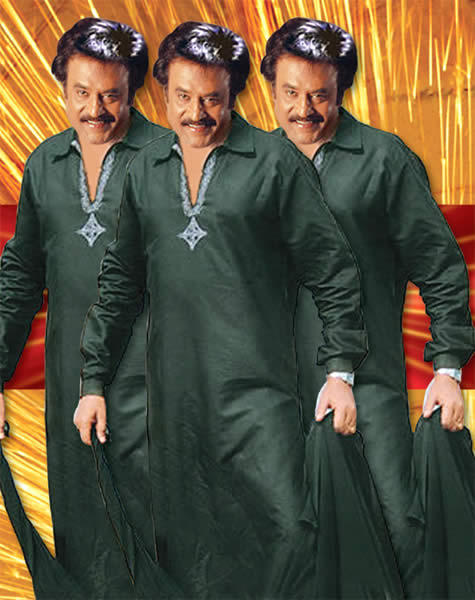
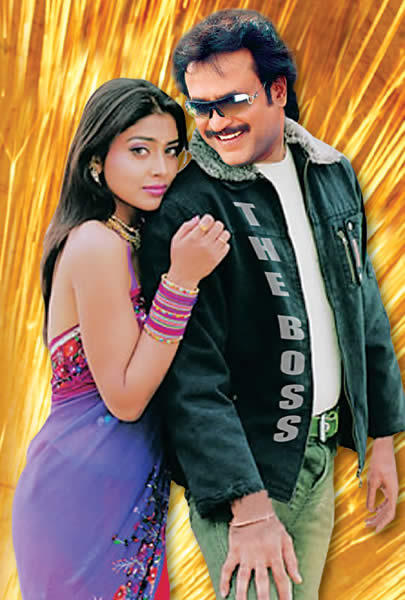
Rajni as SIVAJI


Rajni & Shriya


Again we will hope this pictures will get realised in Movie

Udaaaanssuuuuu

Monday, October 24, 2005

Now its IPOD Turn..


Consumers angry about what they say is the iPod nano screen’s tendency to scratch easily have filed a class-action lawsuit against Apple Computer, saying they want their money back plus a share of the company’s profits on the music player’s sales.

The complaint, filed in the U.S. District Court in the Northern District of California in San Jose on Wednesday, essentially brings complaints about the ultra-slim device that have been festering on blogs and message boards into the courts.

Apple has sold more than 1 million units of the nano since its launch. The lawsuit was filed on behalf of nano owner Jason Tomczak and others who have purchased the device. The lawsuit alleges Mr. Tomczak rubbed a paper towel on his nano’s face and “that alone left significant scratches.” [Link]

Thursday, October 20, 2005

ITC Infotech India Ltd.


I am always proud of being an ITC Infotech'ian, I have already shared few topics regarding my company. Just have look about my Company

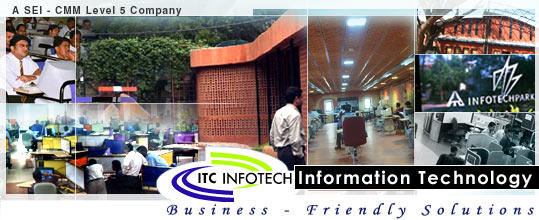
ITC Infotech India Ltd., the wholly owned subsidiary of ITC, offers a powerful customer value proposition based on its in-depth domain knowledge gained from the experience of servicing a range of internal and external customers across diverse domains.

Profiled by Forrester Research as a Leading Tier2 vendor and driven by a CAGR of 54%, ITC Infotech is today one of the fastest growing IT companies in India. Based in the picturesque 37 acres ITC Infotechpark in the heart of Bangalore city, ITC Infotech through its wholly owned software subsidiaries in the UK and US service multiple Fortune Class clients in North America and Europe.

ITC Infotech is an SEI CMM Level 5 software services & solutions provider. Supported by ITC’s strong business fundamentals, our corporate vision and resources are totally aligned to deliver to our global clients the true essence of “Business-friendly Solutions” innovatively and cost-effectively.

We are a part of the ITC Group, one of the world's most successfully diversified companies. ITC is one of India's foremost private sector companies with a market capitalisation of nearly US $ 9 billion and a turnover of US $ 3 billion. Rated among the World's Leading Companies by Forbes magazine, ITC ranks third in pre-tax profit among India's private sector corporations. ITC has a diversified presence in Cigarettes, Hotels, Paperboards & Specialty Papers, Packaging, Agri-Business, Branded Apparel, Packaged Foods & Confectionery, Greeting Cards and other FMCG products

ITC Infotech provides End-to-End IT Services for its clients with a strategic focus on the following solution areas:

Customer Relationship Management (CRM)
Product Life cycle Management (PLM) and Engineering Services
Enterprise Resource Planning (ERP)
Supply Chain Management (SCM)
E-Business - B2B, B2C and Community Portals
Business Process Outsourcing (BPO)
Inspired?

Wednesday, October 19, 2005

Sivaji-Story


சக்தியெல்லாம் ஒன்று சேர்ந்தாலே!- a one line lyric in CM. It comes very true inthe nest film itself. Film Production Giant AVM, Shanker, and Rajni in New movie. No wonder that the turnover is more that 100 Crores. Is this the story?

Sivaji is an NRI. He is a software engineer. He returns to Tamilnadu. He gets dejected on seeing the plight of education department being made a business commodity. He uses all his savings and property and builds world class free education centers. On approaching various departments to accomplish this, he comes across bribery and corruption. He gives everything to get the task done and finally starts his education centers. When all is about to commence, all the other education center owners who made multi-millions, protest against him. They ask the government to cancel Sivaji's license. The government denies their request. As a result the government loses power and is dismissed. The new government cancels Sivaji's license, and demolishes all education centers. After spending all his money on his dream project, which is now no more, Sivaji is left in the streets with just one rupee.

In this situation, how Sivaji overcomes his enemies and how he realizes his dream project again and says 'How is it?" is the story of Rajini's new movie "Sivaji". Directed by Shankar.

I sure this is not the story of the movie!

Are Jews Smarter?

Did Jewish intelligence evolve in tandem with Jewish diseases as a result of discrimination in the ghettos of medieval Europe? That’s the premise of a controversial new study that has some preening and others plotzing. What genetic science can tell us—and what it can’t. [Link]

Tuesday, October 18, 2005

Bihar Election-Phase 1


Nalanda, was the gateway for educataion. Now? Bihar is in the last in the list in Education. Awaited election started today with Terrorism as expected. Biharis are waiting for a Govt. almost for past 1 year. We will forget what happened the election before. Election is a biggest Biz for Bihar Terrorists. Hope Bihar people will elect a party with majority to not to go for one more election. God Please Help those People!

Monday, October 10, 2005

Hebbel Lake


Located in Bangalore Outer Ring Road (North West), near by Bellari-Hyderabad Flyover. A quiet nice place to spend leisure time, not much crowded. Boating is also available in the evening timings. Lot of couples(unmarried) are arriving to this place as this is not crowded much, you can find them under each and every tree. Could be decent if you go with friends rather family. I like Ulsoor Lake as it is much connected and cleanliness. Will post some Pictures of Ulsoor lake in another couple of days.

Tuesday, October 04, 2005

SAP and ME


No company has come to better represent the idea of enterprise applications than SAP AG headquartered in Walldorf, Germany. Today, more than 20,000 companies run more than 64,500 installations of SAP software for their back-office infrastructure. The lion's share of those installations are SAP's R/2 and R/3 ERP systems. When big companies talk about integrating applications today, there is usually an SAP application in there somewhere.

When client/server computing began to flourish in the 1990s, and international organizations looked for financial software suites, SAP successfully moved its former mainframe application software forward. Like others, the firm has had to make adjustments since then -- supporting a number of databases, finding better ways to link to legacy computer systems, linking up with Java servers and embracing so-called Web services architectures.

While SAP applications have long been known for being mission-critical, they are also known for being rigid, complex and tightly coupled. So notoriously proprietary was the company's software, and so arcane its ABAP programming language, that a cottage industry of consultants sprang up to customize, fine-tune and upgrade SAP applications.

While overall company revenue has risen from euro 5.1B in 1999 to euro 7.0B in 2003, software license revenue declined in 2003. The drop was somewhat offset by increases in maintenance revenue, yet the mantra in the IT world today calls for reduced maintenance charges. Like others, SAP is working to create more flexible software and to exploit open-source and XML-based Web services software to make that happen. At the same time, the company hopes to shed its inflexible software image, and to expand into the small- to medium-sized business (SMB) markets.

Why such a Big Blog, what is the reason behind this.. on the way .. Check out my next blog on Monday

Thursday, September 29, 2005

Some Questions to Manmohan Singh

Q: Mr. Prime Minister, what are your aspirations for the country, and what progress do you think India has made? What are your priorities?

Manmohan Singh: The first and foremost priority is to finish the unfinished task which the founding fathers of our republic set out for us at the time of our independence: to get rid of chronic poverty, ignorance, and disease, which have afflicted millions and millions of our people. Great progress has been made. Particularly in the last 20 years, the India economy has done quite well, social indicators and development have improved, but we are not quite where we ought to be. The next 5 to 10 years are crucial for moving forward in areas to stimulate economic growth and also to ensure that this accelerated economic growth really benefits the poorest segments of our society. We need a growth rate of about 7 to 8 percent per annum, sustained over a period of the next 10 to 15 years. We need to underpin that growth by strong performance of our agriculture, strong performance of our physical and our social infrastructure. These are our key priorities.

Q: As we talk with our clients, the first question they ask about is infrastructure. Has India made enough progress?

Manmohan Singh: We have a lot of backlog in improving our infrastructure. We have made substantial progress. Work is in place to ensure that our road system is modernized. But our railway system also requires massive investments. We are working with the Japanese government to draw up a program in which the freight corridors between Mumbai1–Delhi, Mumbai–Chennai,2 and Delhi–Kolkata3 can be modernized. Our estimate is that that will cost about 25 thousand crore of rupees [$5.7 billion], and that's our high priority as far as the railway system is concerned. We need to modernize our airports in a big way. Already plans are under way to modernize and expand the airport facilities in Delhi, Mumbai, Hyderabad, and Bangalore. We also are now in the process of modernizing our seaports. Privatization, public-private partnerships, and new initiatives have been tried.

My own estimate is that we need an investment of about $150 billion in the next seven to eight years to realize our ambition to provide our country with an infrastructure which is equal to the economic and social challenges that we face. I'm not saying that everything is in place, but I think that in the last year that our government has been in office we have set in motion the processes through innovative public-private partnerships to explore new pathways to make the infrastructure ambitions a realizable goal.

Q: You started the reform process in the early '90s, and it's had some ups and downs. One item in that agenda was privatization. I wonder where that stands in your priorities and how you see that moving forward?

Manmohan Singh: We are a coalition government, and that limits our options in some ways. Privatization happens to be one such area. As somebody said, a politician before he can become a statesman has to remain in office long enough. So we have to make those compromises. As far as profitable public enterprises are concerned, especially those which are doing exceedingly well, we don't see that they have to be privatized. But these enterprises, if they want to raise resources for their own expansion, they are free to go to the market. The Common Minimum Program,4 which is the benchmark for us to assess where we want to go, talks about the navratnas.5 These navratnas are companies essentially in the oil sectors, the power sectors, which are doing really well and, other than going to the market to raise funds for their own expansion, our options are limited by what is stated in the Common Minimum Program.

But outside the navratnas, as I see it, the field is vastly open. For enterprises which are not navratnas, if we want to privatize, if we want to get more investment going into those things, I think all options are open. But I must confess to you that in the prevailing milieu, the thinking in our coalition is that for enterprises that are doing well under competitive conditions, we must have special justification to prove to our coalition colleagues that there is need for privatization.

Q: Are you happy with the pace of foreign direct investment? And, specifically, how do you feel about foreign direct investment in retail?

Manmohan Singh: I do believe that India needs a lot more foreign direct investment than we've got, and we should have the ambition to move in the same league many other countries in our neighborhood are moving. We may not be able to reach where the Chinese are today, but there is no reason why we should not think big about the role of foreign direct investment, particularly in the areas relating to infrastructure, where our needs for investment are very large. We need new initiatives, management skills, and I do believe that direct foreign investment can play a very important role.

With regard to retail trade, I am convinced that we can work out a package that is fair, that entry of foreign enterprises into the retail trade will not hurt our small shopkeepers but will create a lot more employment. We have to carry conviction with our political colleagues. I am confident that over a period of time we can do that. But for the time being, I have my task cut out to carry conviction with our political colleagues that this is a way to move our economy to a higher growth path—to create new employment opportunities—that this is not a strategy to hurt the small shopkeepers in our country. So I have my task cut out. In the next four or five months, I propose to engage myself in this task.

Q: The reform process must also incorporate labor reform. I wonder how you feel about that, especially since labor has to be retrained and redirected in many ways for the economy to become more productive.

Manmohan Singh: First of all, we must make a distinction. When we talk about labor reforms, we are essentially talking about 10 percent of our labor force, which is accounted for in the so-called organized sector.7 Outside this 10 percent, for the 90 percent we are a completely flexible labor market. The normal laws of the market take precedence. Even within this organized sector, the problem is most acute in the public sector. In the private sector, most people tell me that they can find ways and means of working out voluntary agreements with the trade unions, whereby necessary labor flexibility can be introduced. In the public sector, we have rigid laws, and therefore there is this problem.

New enterprises, particularly if they are foreign-backed enterprises, do ask this question. And it is a legitimate question. We cannot move straightaway to the Western or the American model of hire and fire, quite frankly. I don't see that there is today a climate of opinion which will go to that extreme. We have to look at the Southeast Asian example, and probably the Japanese. The Japanese for a long period had a different labor-management system.

So we have a problem, there is no doubt. Extreme rigidities in the labor market, inflexibility of the labor market, is not consistent in our achieving our goals in a world where demand conditions are changing so fast, technological conditions are changing so fast. But there are limitations for the time being. We don't have a broad-based consensus in our coalition for me to assert that I can move forward in a big way. But I do recognize that we should take credible action. Our colleagues who are in government in West Bengal . . . do appreciate the need for labor market flexibility. It is my task to carry conviction to our Left colleagues in Delhi. I haven't given up, and I am confident that when all things are considered I think the reform will have more broad-based support. Our coalition today represents nearly 70 percent of the Indian electorate, so we may be slow moving, but if we build a consensus, that will be far more durable than any other mechanism that I know of.

Q: That is encouraging about the West Bengal government. I understand that it is progressive on many labor issues, even though it is a Communist government.

Manmohan Singh: Even in areas of privatizations they are moving, and moving forward. Our role is to convince their national leadership that what is good for West Bengal can also be good for the rest of the country. I haven't given up hope. I have full confidence in the patriotism of our Left colleagues to believe that in the final analysis of what is good for India, they will also be on board.

Q: How will the government generate employment, particularly in light of making sure there are enough jobs for the youth coming into the workforce?

Manmohan Singh: Jobs have to be created in all sectors of our economy. Agriculture still accounts for 60 percent of our labor force, and I believe that we will need a second green revolution to increase production and productivity, and in the process, I hope, we will create more jobs. But essentially over a period of time, our salvation lies in getting people to move out of agriculture. Services today account for 50 percent of our GDP. There are lots of people who tell me that services cannot move far ahead of what's happening in manufacturing, and that worries me—this imbalance. I feel we have to do a lot more on manufacturing because, ultimately, services respond to what's happening in the production sector.

So outside agriculture, in manufacturing and services, we must create a lot more jobs. But that also means that we must ensure that our systems of general education and technical education are in line with the job requirements that a more modern manufacturing and a more modern services sector would require. We have to walk on two legs. We have to create conditions in which manufacturing and services—the economy outside agriculture—move and move fast enough. And at the same time the working force that is available must have skills which will fit the kind of jobs which will be in demand.

Q: What is the government doing to promote India as a manufacturing base, especially agribusiness and food processing, which must be important?

Manmohan Singh: Agribusiness and food processing are important parts of modernizing our economy, of modernizing our agriculture and moving into a phase where a more modernized agriculture helps not only farmers but also helps consumers. Now, I've talked to a large number of producers—people from Hindustan Lever and others—and they've been telling me what India needs most is a unified food law.8 We have just now prepared the bill, and it will be introduced in parliament. The other thing to move forward on this front is that we must have electricity in our rural areas, we must have cold-storage facilities. We have, for the next four to five years, a very ambitious plan to expand . . . the availability of electricity to all of our villages. I hope that that should bring about a new revolution in the handling of agribusiness.

Q: We've seen uncontrolled urbanization in many parts of the world, which really does not improve the standard of living. What is the plan to promote truly effective, productive urbanization as, by necessity, the rural population moves toward the urban centers?

Manmohan Singh: This has to be a fairly controlled operation. The premature migration of very large numbers of people from rural areas to urban areas can give rise to a lot of strains to the urban infrastructure, which can also create problems of crime—law-and-order problems. But we have to recognize that [urbanization] is the inevitable outcome of the processes of growth and the processes of modernization.

Our urban areas need a lot more attention in terms of investment. In my Independence Day speech yesterday,9 I pointed out that already about 30 percent of India's population lives in cities. In states like Maharashtra,10 40 to 45 percent of the population is in urban areas. I expect over the next 10 to 15 years that we will move to a situation where about 50 percent of our population will be in urban areas. We need new strategies to look at urban transportation systems, urban management of solid wastes, new sewerage systems.

This itself would require Herculean efforts of investment, but I don't believe that resources will be a constraint. Our statisticians now tell me that our savings rate has shot up in the last couple of years to about 27 to 28 percent of our GDP. And also we are a country where the proportion of young people to total population is increasing. All demographers tell me that if we can find productive jobs for this young labor force, that itself should bring about a significant increase in India's savings rate in the next five to ten years. If our savings rate goes up, let us say, in the next ten years, by 5 percent of GDP, we would have generated the resources for investment in the management of this new urban infrastructure that we need in order to make a success of our attempt at modernization and growth.

Q: What is India doing to make sure that its economic success continues, by building on both the primary-education system and the higher-education system? Related to that is health. The government spends very little on health and health infrastructure.

Manmohan Singh: You are right. As a nation, we should be doing more in both health and education. But our total expenditure on health, public and private, does not compare unfavorably with other Southeast Asian countries—about 6 percent of GDP. But the mix between the public and private spending is excessively in favor of private spending. Our public expenditure on health is less than 1 percent of GDP. There are neglected areas where the public sector has a major responsibility: for primary health care, rural health care. Our ambition, which we have set out in our Common Minimum Program, is for the next four or five years to raise the public spending on health as a proportion of GDP to at least 2 percent.

With regard to education, I think at the top we have an excellent superstructure. The IIMs and IITs,11 the regional engineering colleges, they have served us well. But ultimately, if the educational pyramid is not right there are limits to getting dividends. Therefore we are making, for the first time, the most determined effort to ensure that all our children—particularly children coming from disadvantaged families, particularly the girl child—in the next four or five years have the benefit of minimum primary schooling. But that will generate demand for upgrading the quality of our secondary schools. We have not given that much attention toward upgrading our secondary-school system, and that is our next step. After what we have done in the last one year, primary education is well looked after. What we have now in place is a system which will ensure that all our children who are of school-going age are in primary school. But the secondary-school system will require a major effort, and it worries me.

'We will attend to that because I believe empowering our people means empowering by investing more in their education and health'
When I look at countries like South Korea, all children who are of secondary-school-going age are in school; our children drop out even before they complete primary school. Therefore, yesterday, in my address to the nation, I laid a great deal of emphasis toward improving the quality of our education, both at the primary level and the secondary level. We will attend to that because I believe empowering our people means empowering by investing more in their education and health.

And as far as the system of higher education and research is concerned, I just appointed, under Sam Pitroda,12 a knowledge commission to look at what needs to be done, where we are, and where we ought to be. In the next one or two years, the knowledge sector will receive our attention to the extent that it deserves. I do recognize that India has to be the center, the hub of activity as far as the knowledge economy is concerned. We don't want to miss the chance.

Q: May I ask a somewhat difficult question? Whenever people discuss India, everyone can talk articulately about the changes that are needed. But in the end, the pace of implementation and actual results often lag behind. There isn't that kind of action bias that you would like to see in the country. Do you agree, and what are you doing to change this?

Manmohan Singh: I think you are right, but one must understand that economic policy and decision making do not function in a political vacuum. It takes a lot of time for us to take basic decisions. And furthermore, because we are a federal set-up, there are a lot of things that the central government does, but there are many things, like getting land, getting water, getting electricity—in all these matters the state government comes in, the local authority comes in. . . . From a political-management point of view, we cannot do without being a federal system, but I do recognize that at times it gives our system the label that it is slow moving. In a world in which technology is changing at such a fast pace, where demand conditions change very fast, we need to look at a more innovative mechanism to cut down on this rigmarole of many tiers of decision-making processes.

I am thinking of identifying areas where we need big thrusts forward. For example, steel is one sector where we are thinking about investing large amounts of money. Our own domestic steelmakers are very bullish in investment in this area. We've got the [South] Koreans involved in building a steel plant of 12 million tons' capacity. Right from the beginning the center and the state governments were working together to ensure that whatever milestones are agreed upon, those milestones were tracked—how they move forward, whether the work proceeds, if there are bottlenecks, to identify those bottlenecks and ensure that those bottlenecks are resolved. For all major projects, this is what I would like to do. It is my intention to set up a mechanism which would bring about a convergence in what the state governments do and what the central government does: a group of dedicated officers to work together to ensure that our three-tiered system of government does not become a bottleneck.

Q: What message would you like to give global managers as they think about India?

Manmohan Singh: If I have any message, it is that it is our ambition to integrate our country into the evolving global economy. We accept the logic of globalization. We recognize that globalization offers us enormous opportunities in the race to leapfrog in development processes. It also obliges us to set in motion processes which would minimize its risks.

I think, overall, India is today on the move. The economic reforms that our salvation lies in—operating an open society, political system, an open economy, economic system—this has widespread support. Fifteen years ago, a Congress government launched this economic-liberalization program, integrating India into the world economy. Since then, three governments have come and gone, but the direction of economic policy has been, year after year, toward more liberalization. The pace may be slow, may not be as quick as some people would want, but the direction is unmistakable. India's future lies in being an open society, an open polity, a functioning democracy respecting all fundamental human freedoms, accepting the rule of law and, at the same time, to emerge as a successful, internationally competitive market economy.

Thanks to McKinsey

Tuesday, September 27, 2005

NRIs on US Top 400.

It is for the first time that three Indians have made it to the list. Shriram, an early investor in Google, is ranked 258 on the list.
Here is the Details about Him

Rank:258
Net Worth: $1.3 billion
Source: Technology, Google
Age: 49
Marital Status: Married, 2 children
Hometown: Mountain View, CA
Education:

Schooled in Madras, India; created shop bot Junglee. Sold to Amazon in 1998. Later backed tech outfits Yodlee, 24/7 Customer, Plaxo, Zazzle.com. Bubble era taught him to adapt: "Living in a world where everything is changing constantly, you learn to change." Views self as "Sherpa" investor rather than angel because it makes him feel more like a guide than a checkbook. Early investor, board member of Google. Sold $400 million in Google stock at offering, still owns 3.4 million shares worth $960 million.

Other who surprised me is Amar Gopal Bose who is the CEO of BOSE Inc. which I believe the costliest Music systems in the Market, is known for high-end audio equipment and dedication to research.
His details
Rank: 283
Net Worth: $1.2 billion
Source: Manufacturing, Bose
Age: 76
Marital Status: Married, 2 children
Hometown: Framingham, MA
Education: Massachusetts Institute of Technology, Bachelor of Arts / Science
Massachusetts Institute of Technology, Doctorate

Fulbright scholar earned Ph.D. in electrical engineering from MIT, founded Bose Corp. 1964. First contracts with NASA, U.S. military, improving audio communications, but brand built on groundbreaking loudspeaker design. Introduced first factory-installed car stereo system 1982; today a major supplier for high-end automobiles (Porsche, Mercedes). Sales: $1.7 billion. Expanding product line: high-end headphones, wireless home entertainment centers, car-suspension systems
Himself by Bose

Wednesday, September 21, 2005

South Indian Vs North Indian

It might be old, but worth reading it once


**WHAT IT MEANS TO HAVE A North Indian GIRL-FRIEND***********
1. At the time of marriage, a north Indian girl has more boyfriends than her age.
2. Before marriage, she looks almost like a bollywood heroine and after marriage you have to go around her twice to completely hug her.
3. By the time she professes her undevoted love to you, you are bankrupt because of the number of times you had to take her out to movie theatres and restaurants. And you wait longingly for her dowry.
4. The only dishes she can think of to cook is paneer butter masala, aloo sabji, aloo gobi sabji, aloo matar, aloo paneer, that after eating all those paneer and aloos you are either in the bed with chronic cholestrol or chronic gas disorder.
5. The only growth that you see later in your career is the rise in your monthly phone bill.
6. You are blinded by her love that you think that she is a blonde. Only later do you come to know that it is because of the mehandhi that she applies to cover her gray hair.
7. When you come home from office she is very busy watching "Kyonki saas bi kabi bahu thi" that you either end up eating outside or cooking yourself.
8. You are a very "ESpecial" person to her.
9. She always thought that Madras is a state and covers the whole of south india until she met you.
10. When she says she is going to "work out" she means she is going to "walk out"
11. She has greater number of relatives than the number of people you have in your home town.
12. The only two sentences in English that she knows are "Thank you" and "How are you"
13. She thinks Govinda can dance better than Michael Jackson.


******WHAT IT MEANS TO HAVE A South Indian GIRL-FRIEND***********
Her mother looks down at you because you didn't study in IIT or Madras /Anna University.
Her father starts or ends every conversation with " ... I say..."
She shudders if you use four letter words.
She has long hair, neatly oiled and braided (The Dubai based Oil Well Company will negotiate with her on a 25 year contract to extract coconutoil from her hair.)
She uses the word 'Super' as her only superlative.
Her name is another name for a Goddess or a flower.
Her first name is longer than your first name, middle name and surname combined (unless you are from Andhra)
When she mixes milk and rice you are never sure whether it is for the Dog or for herself.
For weddings, she sports a mini jasmine garden on her head and wears silk saris in the Madras heat without looking too uncomfortablewhile you are melting in your singlet.
She thinks Mohan Lal is the sexiest man alive.
Her favourite cricketer is Krishnamachari Srikkanth.
Her favourite food is dosa though she has tried North Indian snacks like Chats (pronounced like the slang for 'conversation')
She bursts into songs with her cousins in every movie.
She bores you by telling you which raaga each song you hear is based on.
You have to give her jewellery, though she has already got plenty of it
Her thali (Mangal Sutra) weighs more than the championship belts worn by WWF wrestlers.
She is more educated than you.
Her father thinks she is much smarter than you...

Ps: Thanks to Sri who shared this funny piece.

Monday, September 19, 2005

Nandi Hills


Nandi Hills, 65 Kms from Bangalore and 1,478 meters above sea level is Bangalore's own hill station. It was Tipu Sultan's summer retreat and Tipu's fort walls still stand as testimony to history. The rivers Pennar, Palar and Arkavati originate from these hills. A flight of 1.175 steps lead from the base of the hills to the top. A popular hill resort of the Bangaloreans. The Tipu's Drop, a 600 meter high cliff, where prisoners were hurled down the precipice is an awe-inspiring sight. Atop the hill is the Yoganandishwara temple.

After a longtime I joined with Madhu's Family for this Trip. Have to take Bellary Road. Tourism Development Authority started creating some parks, children play space. Also you can Alcohol in KSTDC Restaurant. Quite good place to spend oneday with your family. Weather is awesome, with chilled wind.

Wednesday, September 14, 2005

Mani Ratnam

Know about my Fav. Director: Mani Ratnam

Mani Ratnam is certainly the biggest director in South India today and a much-respected one all over India as well. He has revolutionized the Tamil Film Industry with technically strong films that are beautifully photographed with well picturised songs. Every frame in a Mani Ratnam film is perfectly composed and beautifully backlit even if this style involves total violation of tonal, focal and colour continuity.

Born in 1956 in Madras, he studied at Madras University and then received a management degree at the Bajaj Institute, Mumbai. He worked initially as a management consultant before getting in to films.(His father was a producer - Venus Gopal Ratnam and his brother G Venkateshwaran, a distributor turned producer, GV Films).Probably he is the only person who has become a director without ever working as an assistant director!

Like almost every person of his generation, Mani Ratnam grew up watching films. In his mid-teens, Mani Ratnam had a moment of realisation as he sat in a dark cinema theatre watching larger than life heroes and heroines cavorting, crying, laughing, leading larger than life lives. For the first time, he discovered that films were conceived and directed.

And that was all. No internship as assistant director. No searching for that elusive director who would transform his screenplay into a living breathing entity. One day, many years later from that first moment of cognition, Mani Ratnam stopped and stared and changed the course of his life. From management consultant to moviemaker.

For almost a year, Mani Ratnam and a few friends dreamed, debated and grappled with a screenplay another friend was working on. The film never got made. But Mani Ratnam had served his term as apprentice to the art of cinema.

Mani Ratnam after deciding to enter the tinsel world, had approached veterans like Bharathiraaja and Mahendran to work with them as assistant director, but was unsuccessful. He then approached Balu Mahendra, ace cameraman and director, who had just finished with his Moondram Pirai (Sadma in Hindi) and told him that he wanted to direct a Kannada film. Balu Mahendra asked him if Mani was qualified at the film institute or worked as an assistant to any directors. Mani's answer was No!. But Balu Mahendra was infected by Mani Ratnam's enthusiasm about his film and agreed to handle the camera in that film.


That film would be Pallavi Anu Pallavi in Kannada. It was later dubbed into Tamil as Priya O Priya. It had Anil Kapoor and Lakshmi in the lead roles and Ilayaraaja for music. It did not create any ripples, though one song, O Premi... in the film shot stylishly in an auditorium gives a good hint of the Mani Ratnam to come in later years.

Later he entered to Tamil industry with Pagal Nilavu(again a flop Movie). Later he has revolutionised the Tamil Film Industry with technically strong films that are beautifully photographed with well picturised songs. Every frame in a Mani Ratnam film is perfectly composed and beautifully backlit even if this style involves total violation of tonal, focal and colour continuity. Today Mani Ratnam is happy that many qualified professionals from various fields are showing interest towards making good films.

In the 1980's most of Mani Ratnam's films like; Mouna Ragam, Nayagan, Agni Nakshatiram, Anjali, Dalapathi, were produced by him. Later Mani Ratnam started to produce his own films under the name AALAYAM PRODUCTIONS (with Mr. S Sriram) and then later MADRAS TALKIES (with Mr. G Srinivasan).

Advents: PC SriRam(My Fav. Cinematographer), AR Rahman(came from ad jingle composer A S Dilip Kumar aka A R Rahman. Roja (1992) heralded this new musical whiz into the film industry. The music of Roja was a trial blazer of sorts.)

Tuesday, September 13, 2005

SivaSamudram & Somnathpur

This is my first family trip in India. Mr.& Mrs. Ila, my brother & sister were started exactly 1 hr late as per plan.
SivaSamudram falls, located in Mandya District, Karnataka. In Karnataka the river is divided by Sivasamudram Island and drops 320 ft (98 m), forming Cauvery Falls. On the left falls is India's first Hydroelectric plant (built 1902). 2nd biggest waterfall in India. It has Two branches called Bhara Chukki, Gagana Chukki. Sivasamudram also called as SivanaSamudram or Bluff is 120 off from Bangalore. It can be reachable in 2 different paths one is via KanakaPura and another Maddur. Better to reach by own transport, public transport are not frequent also difficult to reach from Bangalore.


About Cauvery: The Cauvery, India's second most sacred river, is sometimes called the Ganges of the South. According to Hindu legend, Vishnumaya, daughter of the god Brahma, was born on earth as the child of a mortal, Kavera Muni. In order to bring beatitude for Kavera Muni, she became a river whose water would purify all sins.

After spending 2 hrs here we went to Somnathpur which is around 45 Kms away, road is horrible, where road is in between the cultivated farms, This year VarunaBagvan has given a lot of blessings to Karnataka, so farms are looks lush green, watery everywhere. Yes, Karnataka is very rich and wealthy.We reaced Somanathpur at around 3:00 pm and realised that worth in coming in a such a crap road.

Somnathpur is situated in a tiny village on the banks of the Cauvery.
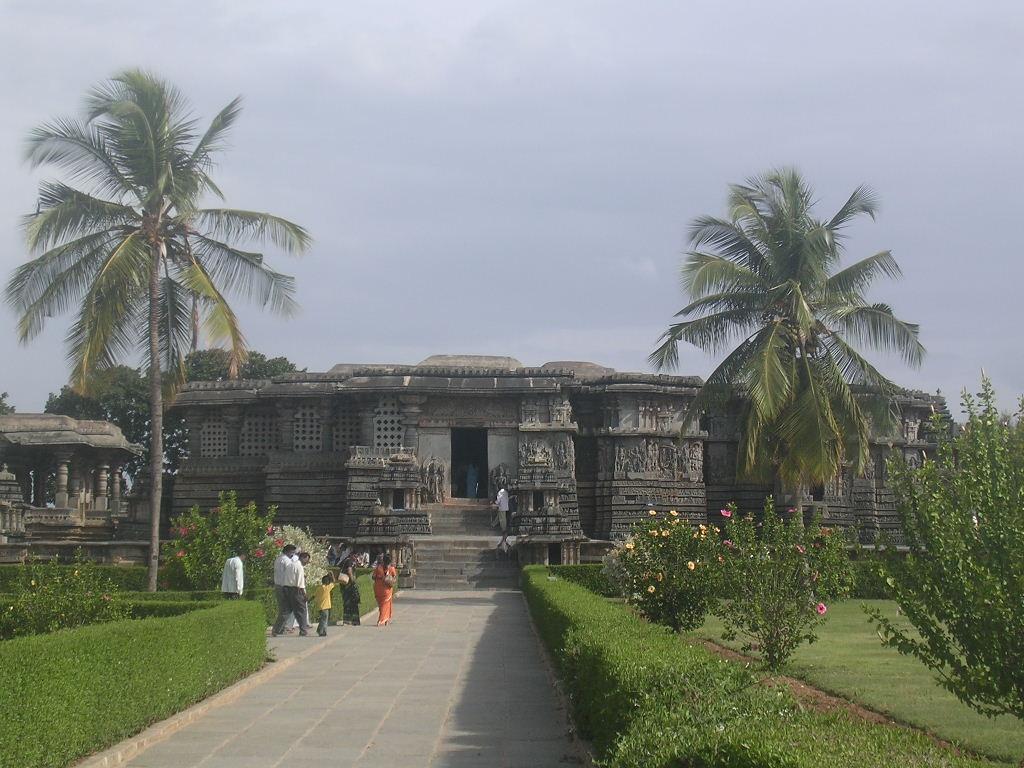
The Kesava Temple was build in AD 1268, by Somanatha Dandanayak, as illustrious General of the Hoysala king Narasimha III(1254-1291AD). This temple is a perfect example of the Hoysala style of architecture. It has three sanctums on the West, south and north to Kesava, Venugopala and Janardhana, all connected. It is an orantely carved temple of magnificent craftsmanship depiciting Vishnu, Lakshmi, Saraswati, Ganesha, Rati-Manmathan and Mahisura. The ceiling and door jambs leading to the sancrum sanctorium are exquisitely carved.lso it is mainitained well with garden and toilet, entry fee is Rs.5 foe Indians and $2 for other citizenships.

While coming back I have seen a similar kind of town of Bhavani where 2 rivers join their hands(Kooduthurai), name is Thirumakudal Narasipur. We reached with racing on Mysore road at 9:30pm. Its was a Great trip.

Tuesday, September 06, 2005

Vinayaga Chathurthi!


This festival is celebrated in the month of avani on chaturthi (4th) day which comes after the new moon. It is celebrated all over India. People celebrate this day in a variety of ways. For anything to go well, we pray Lord Vinayaka. He is the first to be worshipped whenever we start anything. He relieves us from all our difficulties. He solves our problems.

Lord Vinayaka has got an elephant face and human body. He is worshipped by many names like Vinayaka, Ganesha, Pillayar, Vigneshwara, Gajanana, Ganapathy, Mooshika Vahanaa, Modhaga priya etc. He rides on an animal called mooshika(a large kind of rat).

In houses we celebrate this pooja in a grand manner. We decorate the floor with kolams using rice flour. On that day we buy a new Vinayaka idol(made of clay). We also buy a decorated umbrella to place behind the idol. On a wooden plank, plantain leaf is placed and raw rice is spread over it. We place the idol on this and decorate with flowers and perform pooja.

Vinayaka likes a dish called mothagam(kozhukkattai). So different varieties of kozhukkattai are prepared and offered to the lord on this day. It is the special item on this day. On the next day, punar pooja is done. This is the pooja which acts as an ending to the festival. After this we remove the idol from its place. On the next day after punar pooja, we immerse the idol in water in the sea, well or pond.

In cities like Mumbai, Chennai etc. large Ganesha idols (a bout 6 ft) are placed in common places and pooja is performed in a very grand manner. People all around worship the lord. Prasadams (Dish offered to the lord) are distributed to the people. After the pooja is over, the idol is taken in a grand procession and immersed in the sea. (Ithu oru peria kalaatta)

For this pooja, different flowers are used. Erukkampoo(calotropis), thumbaipoo(white small flowers and arugampul( a type of grass) is very special for the lord. Different varieties of fruits are also offered.

Monday, September 05, 2005

Name my Tamil Blog

Since I have been trying to name for my Tamil Blog, I found few names however not able to finalise a name.
Friends, being a farmer's son I want to have an blog name which related to my Village
Thanks in Advance


Choose a Best name for my Tamil Blog


To select multiple entries hold the Ctrl key (or the Apple key)

Free polls from Pollhost.com

Thursday, September 01, 2005

Bangalored


Bangalore may have become only the second modern city in the world to be turned into a verb – after Shanghaied, a word that broadly means to force –thanks to the outsourcing controversy.

What it means?

Bangalored adj. (said of a corporation, project, or employment) having been relocated to India; having lost business or employment due to such a relocation.

Click this link -->"Bangalored" is a verb which recently got added in the dictionary. A person is said to be bangalored if he lost his job because the work got outsourced to bangalore or any other city in India.

Lot of people in US got bangalored that it became an issue during the US presidential election. That's exactly when this word was coined. One such similar verb is "shanghaied" which means kidnapped.

Although it sounds like great, to hear that bangalore has a verb in its
name, the disappointing factor is that it has a negative meaning.

So Dont use the sentence that "I am being Bangalored"

Saturday, August 27, 2005

Weekly Blog

About Symbiosis Exams:
Study material which they provided is upto Symbiosis level, however exams are more practical oriented. Even if you fully through the book will not be sufficient to attend the exams. Then how to prepare for exams? Go through the book, do some case study on each and every chapter after then have to have practicle knowledge and lot of general knowledge.

An intersting incident happend last week. I parked my vehicle in front of my examination center(Arena, CMH Road, Indra nagar) and went for my exam, is about 1 hr. When I came back from after my exams, I found my vehicle was missing. What to do? it's a new vehicle brought 2 months back only. I was tensed, started sweating and I dont have idea to do further. Then mentally recovered to search for it. I went to nearest Traffic Police station in CMH Road and have been diverted to Indra Nagar Police station as it was a missing case. There, Inspector was really helpful questioned me what was happend. After getting my answers he cleared to me that and told me a fact. Fact was that, I parked my vehicle in NO PARKING area. So sincere traffic department has taken vehicle to their custody. Where? there is no GOOGLE to search for it. Got a news that toed vehicles will be found in Biappanahalli police station. I went to the police station and found my was there and tied with big iron chain(like manohara Sivaji). Again I found that police station is for Criminal Cases(hahhha), at the same time they told traffic police will come there to release the vehicle after getting the penalty(?!). I found few guys are also waiting to realse their vehicles, started chatting with those guys(kashtathilum comedythan). TrafficInspector came after 20 mins with some more vehicles(pity owners). And he asked to come in queue to collect the vehicles. As a first person I went to collect the vehicle, he asked for Rs.300/- and given a reciept for Rs.100/-. I shocked and started starring, but he given one more reciept for another Rs.200/-. Sincere Sigamani. Moral of this story is DONT PARK THE VEHICLE IN NO PARKING AREA.

Wednesday, August 24, 2005

Asphalt Godowns to an IT Company

Since Indian IT Company's architecture are started competing with best world architects, an pretty old Asphalt tobacco godown has been renovated to Beautiful IT Software Company in Bangalore.

Driving from the airport into this city that has become India's technology hub, visitors are struck by the gleam of steel-and-glass high-rise office and apartment buildings with names like Golden Enclave and Diamond District. Farther along, dozens of box-shaped, glass-encased buildings carry signboards of the biggest Western high-tech companies.

In contrast to these unabashed clones of buildings in Palo Alto or San Jose is a 37-acre campus in the heart of the city whose granite- and terra cotta-adorned buildings are set among decades-old trees and painted in vibrant Indian shades of brick red and deep green. The buildings have names from the ancient Indian language of Sanskrit, while the rooms within are named after the ancient books of learning, the Vedas. Every morning the Indian flag is ceremonially hoisted on a central flagpole, an unusual practice for businesses here. At lunchtime, the chirping of birds mixes with the chatter of workers in the open spaces . Young men in jeans and polo shirts and women in colorful salwar kameez (an Indian tunic and trouser suit) linger along the stone-paved avenues.

The campus, with its distinctive architecture, is the headquarters of a four-year-old outsourcing company called ITC Infotech. With 4,000 employees and $55 million in revenues, the company's professed philosophy is not to let its workplace be an imitation of countless modern buildings. Flouting the local fashion for buildings with names like Hi-Tech Tower or Software Techcity, the company calls its campus simply the ITC Infotech Park. As its managing director, Sanjay Verma said, "This campus reflects our Indian-ness."

The tranquil expanse that blends the old and the new provides relief amid the concrete and glass structures in Bangalore, a city that the World Bank lists as among the fastest growing in the world. The country's biggest domestic outsourcing companies like Infosys Technologies and Wipro are headquartered here, as are the Indian branches of multinationals like Intel and Texas Instruments.

In the last decade, the boom in the outsourcing of services from Western countries has brought about a construction explosion in the once quiet and orderly Bangalore. Call center and software services companies have grabbed whatever high-rise buildings that have sprouted up, as if overnight, with scant regard to urban planning or design.

"Companies say, 'We need a million square feet of space,' then go to their laptops and slap aluminum and glass over the million square feet," said Bob Hoekstra, head of the software division at Philips Electronics India.

Mr. Hoekstra, who is campaigning for the local government to improve facilities like roads, traffic systems and public transport, said multinationals like Intel and SAP AG had given little thought to aesthetics. "Intel's campus looks like a parking lot with a building in the middle; SAP's resembles the Frankfurt airport," he said.

In the new buildings of Bangalore, and other outsourcing centers like nearby Chennai or Gurgaon in the suburbs of New Delhi, academics see an eagerness to conform to what is perceived here as the Western taste.

"Companies psychologically feel that their Western clients want to come here and see something that looks familiar and efficient," said Aparna Narasimhan, an architect at the Bangalore-based firm Venkataramanan Associates, which has designed buildings for Infosys and General Electric.

When ITC Infotech set out three years ago to plan its campus, it bucked such trends. Opportunely, its parent, ITC Ltd., a 100-year-old cigarette maker with interests in hotels, apparel and food products, offered its defunct tobacco manufacturing complex in central Bangalore. But one architect after another suggested the same plan: bulldoze the 36 tobacco warehouses and replace them with glass-and-steel high-rises. Mr. Verma, ITC Infotech's top executive, who first joined the parent company as a young shift engineer at this tobacco complex in 1981, found this idea repugnant. Finally, the company came to the Bangalore-based architect Krishnarao Jaisim, who agreed with Mr. Verma that the old structures and environment were worth preserving.

Mr. Jaisim, whose firm is named Jaisim Fountainhead, in reference to the Ayn Rand novel, said his work had always been defined by the book's central character, the architect Howard Roark.

"I read the book in the 1960's; it has been my moral guideline ever since," he said. The book influenced him to work on his own terms and abhor commercialism, he said.

For ITC Infotech, Mr. Jaisim said he wanted to come up with a plan that would retain the character of the old warehouses while upgrading them.

"When I started, the warehouses stank of tobacco and every road was covered with asphalt," he said.

Three years later, two dozen of the warehouses have been modified to seat hundreds of workers each, and most of the streets have been paved with local stone. The architect retained the shell of the old high-ceilinged warehouses. Besides the strikingly minimal use of glass and steel, these buildings have unusual new touches: walls made of hollow terra-cotta blocks, flat stone tables and acoustic-friendly ceilings that are fashioned out of earthen pots. The giant century-old chimney, ancient trees and even an old fire station have been left standing.

One jarring note is the unusual number of smokers on the campus. Unlike other outsourcing firms, where smoking is frowned upon, at this subsidiary of India's biggest cigarette maker the practice is not discouraged.

The distinctive marks of the company's ideas have paid off for ITC Infotech in unexpected ways.

"Many employees feel a strong sense of pride in their unique campus," said Anirvan Mukherjee, a systems analyst who joined ITC Infotech nearly three years ago.

"One of the high points of working here is the campus," said Mr. Mukherjee, adding that his workplace was the envy of all his friends.

Mr. Verma said that in Bangalore, where competition for skilled talent is intense, "Our campus is a great differentiator."

It is a refreshing change from the "clipped, almost Californian, presentation of the typical campus" said Simon P. Bentley, vice president for application development at DHL, one of ITC Infotech's customers. Mr. Bentley said it is a "beautiful oasis in the midst of the daily noise and difficulty" of life in Bangalore. It was as comfortable and efficient as his own offices in Scottsdale, Ariz., he said, but with a "more enviable" natural environment.

Aesthetic examples such as ITC Infotech are rare, said Kamal Sagar, a Bangalore architect whose firm, Total Environment, prides itself on creating structures that incorporate greenery and local building materials.

"Every company wants to outdo the other," said Mr. Sagar, citing the spaceship- and Sydney Opera House-inspired food courts at Infosys's headquarters and its plans to build origami-shaped buildings in nearby Mysore. "Companies like Infosys and Wipro have the power to shape Bangalore's skyline," he said, "and so they should."

Sunday, August 21, 2005

Exam Time

Since I have PGDBA-Exam (Symbiosis) I am taking a small break for this week and will comtinue my blogging from next week onwards(Tam & Eng).

Friday, August 19, 2005

Thursday, August 18, 2005

Kannada Films

I have taken a review of Kannada Films and gathered few interesting news about this industry. I will post it in phase by phase as it has long story behind. This R&D started all beacuse of Prasad,Anil(AR) & Siddappa. Sorry to Prasad where We( Tamil CSC) used to crack jokes on Kannada Movies.

Let we start from 60's

In the 60’s and 70’s, of course the films were different and indeed look refreshing even if watched now. This is because they contain evergreen stories, thoroughly prepared screenplays, extraordinary lyrics to songs, excellent & committed performances by the artistes & technicians. Hence, one can detect very few flaws in those films.

In the 80’s, it started showing the monotony. Most of the films contained one famous formula: A hero, who initially is easy-going with few romances with his girl, continues enjoying his life. Suddenly there is a flashback which enlightens him about the story of maybe his parents attacked and tortured by the villains. In the meantime hero himself experiences bitter moments with these villains. Few songs, a rape scene, few ugly comedy scenes etc. to complete the masala. And towards the end, the villains create the ultimate trouble by kidnapping someone that hero is fondly attached with. And then, there is that lengthy climax which enhances the glory of hero over villains. Usually the film would end with a happy-note, maybe a bit of sentiment with somebody sacrificing their life.
In 90s, another trend emerged. An easy-going hero falls in love with the heroine through mere eye-contact. He conveys it to her; she hesitates initially and finally succumbs. Few hiccups due to either families, economic-communal differences or some other villains. So hero does all the heroics to come out of this. Heroine is just a glam-doll through out the film. And finally the film ends with the superlative message like, “namma preethige jaya” or sometimes, “premigalu sattharoo preethige saavilla”.

So people can’t find stories for films, can’t even make considerable alterations in screenplays or at least change the narration-style.

In the late 90s and 20th century, they got a so-called fresh concept. It was indeed fresh when it was all started by Sunil Kumar Desai in “Beladhingala Bale”. This is the concept where, the hero and heroine love unknowing each other. A telephone, letter, email or even a piano or violin would be the mediator for them. And some times they even know each other, but mistake some body else as their lover who comes in their way—maybe one among the three would be playing the game.

OK, at least here there is a fair share for both hero and heroine to perform. But how long can we tolerate this concept. To name few of the films which followed this trend are: Yaare Neenu Cheluve, Kushalave Kshemave, Heart beats, Jodi, Chora chittha chora, Ninagaagi, Kanasugaara, Excuse me, Romeo matthu Juliet, etc. etc. (Know there are far too many films other than these and most of them are remakes too).

There is something called creativity in any ART and one needs to enjoy the work of film-making. Of course, few of would argue that this is the story of any other Indian language films too. But there are other reasons too for which Kannadiga's are struggling this way.

Thursday, August 11, 2005

7 ideas to Make Positive

Listed below are seven ideas that really work to help you think more positive. Life is difficult, but there are things you can do to lighten your load. See if some of these don't help.

Teach Yourself A Lesson

In counseling this technique is called reframing. You take a bad experience and try to define what it is that you can learn from this experience that will make your life better. It is a way of turning pain to gain.


Interrupt Your Negative Thoughts

Research shows that if you continue to think negatively, you will feel more negative. Interrupting those thoughts and replacing them with positive memories can be extremely helpful in creating more positive energy.


Set Realistic Goals

Positive thinkers have learned how to meet their objectives. They set standards that are neither too high nor too low. They feel a sense of accomplishments when they complete tasks on their daily "to do" list. Realistic goals must be specific and they must be achievable.


Be Good To Yourself

You need to define those things that make you feel good and as often as you can incorporate them into your life. We know that positive reinforcement works. You need to reinforce yourself with the things that you value and enjoy.


Look For The Silver Lining

While it is true that negative things do happen and that there are times, when we seem to be overwhelmed by them, it is important that positive things do, in fact happen. Take time each day to write down or think about positive things that occurred in your day. It could be as simple as looking at a beautiful cloud, or hearing a song that you really enjoy.


Be Glad It's Not Worse

This technique simply put says, while my situation may be bad, it indeed could be worse. An example would be that you break your wrist, but that's better than being paralyzed for the rest of your life from the waist down. While sometimes our situation is as bad as it gets, usually, in most of our situations, we can find things that are worse.


Fake It

Charlie Chaplin once said, "Smile though your heart is breaking." While it is important to get in touch with our feelings, being able to tell a joke, put a smile on our face, or do something that is absurdly pleasurable can help the discomfort of our lives go away.
Consider whether any of these techniques help you think more positively.

Friday, August 05, 2005

Yahoo-Audio Search

As Yahoo started competing with Google yesterday they introduced the test version of a service that lets people search more than 50 million music and other audio files on the Internet. I remember, Altavista started this feature a few years back and most of us dont know about this feature with Altavista. Google and Yahoo are in the competetion and not able to find Altavista is in this competetion. Why?

For search Audio through Yahoo http://audio.search.yahoo.com

Some chotta motta company will be loosing their product even though having good feature when some big company is using the same technology.

Was Altavista has been acquired by big companies?

Wednesday, August 03, 2005

Tuesday, August 02, 2005

My New Web Site

My Dear Bloggers,

I would like to inform you all the I moving all my blogs to my new web site www.ilamurugu.com by phase. I request you all who are all having my blog link as www.binarywaves.blogspot.com change it to www.ilamurugu.com. Sorry for the inconveinience.

Monday, August 01, 2005

(s)Log(o)an

Bloggers,

I would like to have an web logo for my new web(will be announced later). Please suggest me a new logo which is visible on top-->left corner on your web page.
Also a slogan (Just Build a Better You-existing one)

Shoot your comments.

Thursday, July 28, 2005

Anniyan Vs Ganguly

Just for FUN,
For: Who knows about Anniyan, else continue with your valuable work
Ambi: Mr ganguly y r u shouting at the umpire, after you have been declared out ??? athu sattapadi thapu Sir.
Ganguly: Dey kudumi, naa yaar theriyuma Bengal tiger appidithan kathuvein.
Ambi: Kenya,bangaldesh kooda century adikirelae australia, Pakistan na 1 bathroom poralae yein sir?
Ganguly: naan dhaadhaa da, thevayana apo matum than aaduvein.
Ambi: Mr ganguly captains like ponting, inzy, smith ellarum century adichu team jeyika vaikara, aana neengo aadave matiringale?
Ganguly:dey kudumi,athan sachin, dravid, sehwag ellam century adikiraanungala apuram naan yethuku adikanum
Ambi: Alatchiyama pesathingo Mr ganguly, aduthava talentla fame gain pandrathu thapu!!
Ganguly:Poda kudumi, yenake advice pandriya @#%@^#$%^@$%^$%^$%^

Anniyan:DEY BAADU..........
Ganguly: yaaruga neenga gillespi maathiri hair style vachurikeenga???
Anniyan : naan avan ila da yema , yenda run adika ve maatingara,
Ganguly: Batting form appo appo vanthutu pogum, cricketla ithellam sagajam thanga.....
Anniyan : ippidi soli thapichidalaamnu paakiriya.....
Anniyan: oru matchla 5 run mattum edutha thapa?????????
Ganguly:onum thapu ilinga......
Anniyan: 5 matchla 5 run edutha thapa?????????
Ganguly:thapu maathiri thanga theriyuthu..........
Anniyan: 5 varushama 5,5 matcha 5 run edutha thapa?????????
Ganguly: periya thapu thaanga...........
Anniyan: kamunati athathanda oruoru matchalayum nee panikitu iruka
Anniyan: unakellam karuda puranampadi ballbojanam thanda, @#(&@(^#@%#$^@)^@^$#)@^$#.

Thanks to Hari for Sharing this.

Tuesday, July 26, 2005

Beware: Pirated Windows


India is the 2nd largest in Pirating softwares and movies in the world. 90% of home users (assembled) are having pirated softwares, not only OS all of the remianing packages available. Now, Microsoft want to apply a brake for this. For updates previously what we will do, just click on windows update and get download all the patches, Service Packs to our systems. It cannot be done from next monday.

How? What was previously a voluntary program to ensure the legitimacy of Windows installs is now mandatory. Microsoft has flipped the switch on Windows Genuine Advantage 1.0, requiring that users of Windows Update and Microsoft Download Center validate their operating systems.
Security updates will remain widely available, however, muffling criticism that a crackdown will lead to untold numbers of hacked and zombified systems.

The program works by downloading an ActiveX control for validation. Once deemed genuine, a download key is produced for future downloads. One benefit is that Windows users will no longer have to enter their 25-digit product keys for validation.

Microsoft's aim is to put a dent into the software counterfeit market, which according to the Business Software Alliance is costing vendors billions of dollars a year.

The program also rewards unwitting users of pirated Windows by offering free legit copies if they take the time to fill out a report, mail their counterfeit install CDs and provide a receipt. Those that only fill out a piracy report can score real versions of XP Home and Pro at discounted prices ($99 Home, $149 Pro).

So Bloggers make sure that you are working with Original OS.....

Thursday, July 21, 2005

Job Search

Job Search

Not for me

One of my cousin who is in my house started searching job in Indian Silicon Valley. First of all he just cleared his final semester (BE-IT) and came to the market to sell himself for a better price. He usually tells about the day-day activities to me. First he tried for some call center jobs. I was in thought that Call centers are welcoming the freshers with red carpet, which is absolutely wrong. Call center are looking for science & arts graduates not engineering freshers. Reason: Engineering freshers will jump to Software companies if they get a chance.

Next Software companies, Last week I heard that 27000 people written the exam for TCS(most of them are freshers). So assume the competition among freshers. The guys who got selected campus are very lucky. Are the campus recuited are all from IT? Certainly not. They are from Elec, Elec Comm, IT, Comp Sci., Civil, Mech, Mettalrgy majors. What a guy will do if done his graduation in Civil and writing code in C++. The efforts which he put for his civil are all goes Vain. However we cannot underestimate students now. They are very sharp now, grasping the market level in final year and tuning themselves to sell to the market. Back to the point, my cousin's worry is that he cannot compete with the other major students who is having strong funda in Computers with some certifications.

So the ultimate point is that, graduation never matters to enter or stick to IT field. Get some certifications, good in communication gets the jobs for freshers ASAP.

Dont wait for the job to hit you, hit the jobs with your skills.

Tuesday, July 19, 2005

Advt.

Nowadays, advertising is intersting than the programmes which are all broadcasted in TV. Some advertisements are really good, some realy sucks..

The Liril Advertisement is the one which affected me directly. When I was staying in a PG those guys started calling me how Advt does, pity thing is that Advt shows how a man seducting a woman @ last vice versa also. Advt goes like this La ILA ILA ILa ....

Kwalitywalls advertisement. it crossed all the limits, it is almost like a blue film if you think @ that way, tooooooooooo much.

HDFC- Really touching the heart. Train arrives to the station and dad will try to get down from it. Son gives his hand for support. Dad (60yrs) avoids his support and he will get down. Now Dad gives the hand to his wife she also avoids that. Finally the grandson will fell and trying to standup everybody waits there to get up himself. Great idea.

Horlicks- Once upon a time Advertisements were copied from Film songs. nowadays it become vice versa. In such movies like Jithan songs are copied from Advt.

Anyway the worth of effort for Advt. are improved very much. Rajiv Menon, called as the Guru for Advt.. Also AR Rahman from Jingles only. Hatsoff to those people who improved this Industry like any thing.

Friday, July 15, 2005

Fido


My Fav. cartoon characters are Tom & Jerry and Fido Dido. First time when I have seen the advt of 7up Lehar, i got inspired Fido. Then I used to draw Fidos like cooking, driving (ithu thana time to disclose I do sketch). I got some few interesting new about Fido, I like to share with you all

Fido Dido is a cartoon character licensed to Pepsico for their 7UP brand (in the United States, 7up's country of origin, it is not a Pepsico brand, however it is, in foreign markets). The character was created by Joanna Ferrone in 1985 on a Napkin in a restaurant. He was licensed to Pepsico in the 1980s but the character was never used until the early 1990s on numerous products, particularly stationery. He was first licensed by Pepsico in the early 1980s and, after a short break, reappeared in the 2000s.

Monday, July 11, 2005

Trip

Myself, Cogito and 2 of our friends gone for Religiuos trip this sunday, anyway Cogito will be updating the trip details have a glimps of few pictures

Lord Gomateeshwara:

In Kannada shravana indicates the Jain Tirthankars and belgola means a white lake. Shravanabelgola, a Jain shrine that is a must if you are on a temple safari, is 84 km from Halebid via Hassan, 52 km from Hassan, 86 from Belur, 115 Mysore and Bangalore 155 km. This town at an altitude of 3056 ft is about l'/2 hr journey by bus from Hassan. Famed as a Jain shrine in the past, it still has people remembering its ancient heritage. In 3 BC the Indian emperor Chandragupta Maurya came from his realm to Shravanabelgola accompanied by his. Guru Bhadrabahuswami and was converted to Jainism.. In the course of time, under the patronage of the Ganga kings, Jainism spread between 4 to 10th centuries. Accord­ing to legend, the first Tirthankar or Guru of the Jains, Rishava Nath, abdicated the throne and entered a forest to do penance. His two sons, Vahuvali and Bharat clashed over power. Though Vahuvali won, he left the throne to his vanquished brother and went on banprastha or renounced the world for 1000 years. The 17.5 m high unadorned statue of Vahuvali seems to preach the tenets of renunciation and self-control. This mono­lithic stone statue built in 983 at the initiative of Chamundraya, a minister of the Ganga kings and executed by Aristonemi the sculp­tor, is the highest in the world. However, the figure of Baon Gajaji curved amidst the mountains in the Narmada valley of Madhya Pradesh, though not monolithic, is 87 ft high

Mylapore Theppa Kulam?


No, it is not. It is a tank which is in SharavaBelagola, photo was taken from the top of the hill.


Halabeedu:


Looking for a Bright Future?

Thursday, July 07, 2005

Terror will not win


My Dream is to settle down in London,UK as the people and the culture inspired me to stay there for a long time.


A series of explosions has ripped across central London, killing at least 37 people and injuring many hundreds more. Again a Marid, 9/11, why????? G8 or collapse UK's Pound value, revenge as they joint with USA for War? No answers.

G8, save yourself and then try to helpout other countires.
India is shouting against Terrorism asking for help from UN to overcome Kashmir issue, I believe they will feel the pain of India atleast now and help us to kill the terror creatures in India.

Bombers! down down. Dont spoil lives and hopes.

LinkWithin

Related Posts Plugin for WordPress, Blogger...